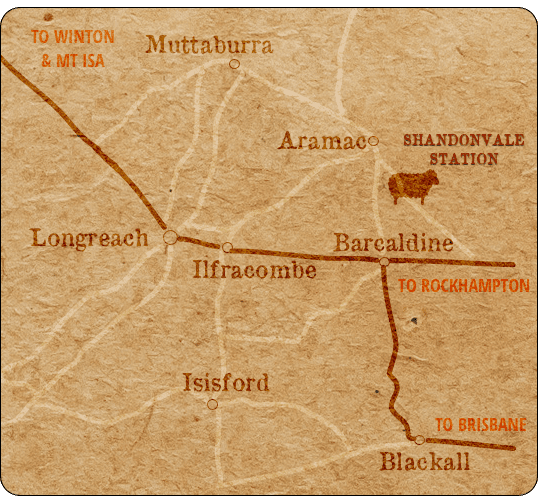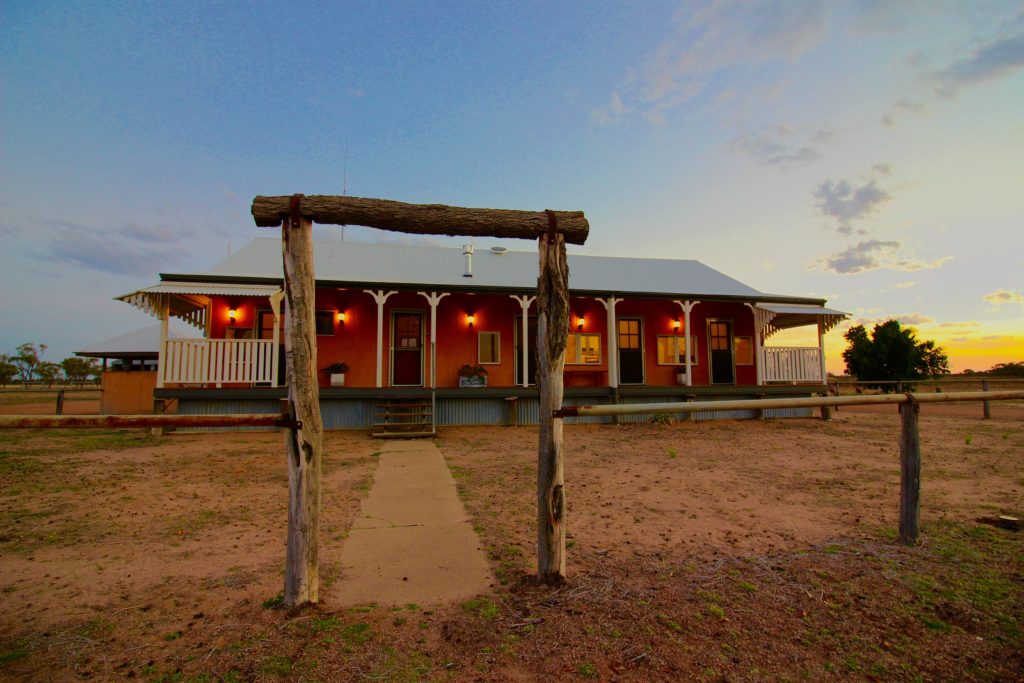
Lane and Deon Stent-Smith operate Shandonvale Station, a working outback station located 1.5 hours by road from Longreach, Queensland. The couple established the Station Stay offering in
2016 in response to several years of drought. “We wanted a way to diversify our income. Being a smaller place, another stream of income is critical and the fact that the property is so remote means that you can’t just get a job in the local town because it’s too far to travel.”
At $1,700 a night as a flat rate for up to eight guests, the Shandonvale experience is positioned as a mid-range luxury offering. But as Deon readily points out, that doesn’t mean that guests can’t
expect to get an authentic experience. “Our offering is based on the real deal, not the polished side of tourism. That’s the point of difference we offer.”
The couple require a minimum two-night booking, with the current station stay package including:
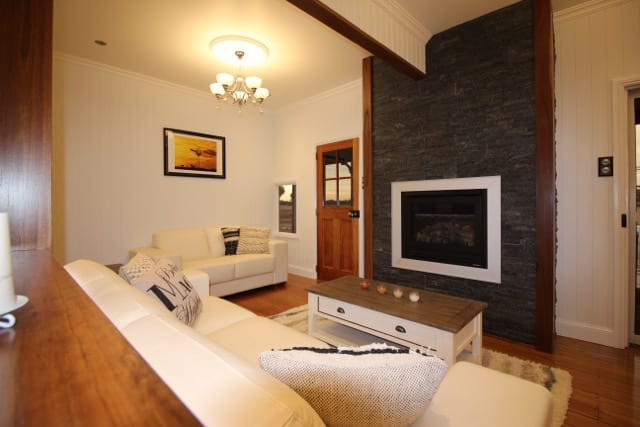
- Luxury accommodation in the recently renovated, hundred-year-old Shearer’s Quarters;
- Full use of the Quarters kitchen, dining and living room;
- Close and personal interactions with animals on the station;
- Sunset boat shed drinks and canapes;
- A paddock to plate journey including a station produce breakfast basket and homecooked gourmet meals at the Homestead each evening;
- Full use of a Polaris ATV buggy for sightseeing;
- Full use of canoes, boat shed and pontoon for fishing and water leisure;
- A fully guided station tour;
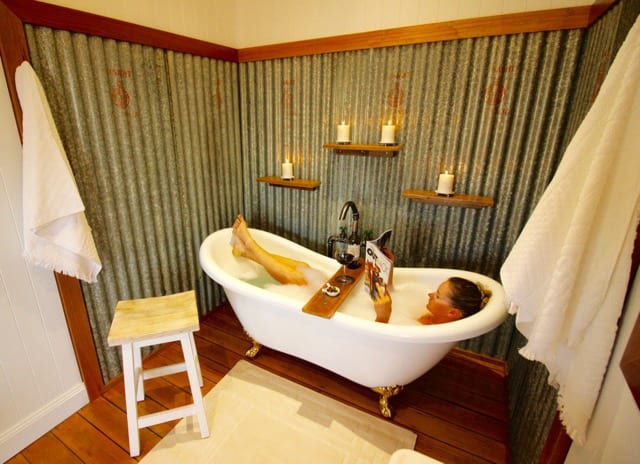
- A treetop artesian bath experience; and
- Shooting practice at the rifle range.
It’s sometimes easy for us to forget how spectacular our country is. In a lot of respects, the outback is like parts of Alaska and the Arctic, it is so expansive and that’s all part of the attraction.”
Deon Stent Smith, host of Shadonvale Station
The couple emphasise the importance of the minimum two-night stay requirement. Their view is that they are not positioned as a motel. Their offering is designed for guests to spend time at the station and appreciate all that it has to offer. “We find that the shorter people stay on the property, the more time and effort is required on our part”.
Our offering is based on the real deal, not the polished side of tourism. That’s the point of difference we offer.
“We’ve also seen a lot of failure with models where people open up land for camping or caravans so it’s a conscious decision of ours to not go down that path”. Deon’s argument is that the low prices for camping and the amount of people likely to visit means that it is barely enough to cover insurance requirements, extra infrastructure requirements, waste removal, etc.
On the topic of time and effort, Deon indicates that the couple recently decided to alter their model slightly as of next year to position it as a self-contained retreat. They intend to provide guests an offering that enables them to relax in privacy, with as little or as much interaction with the hosts as the guests’ desire. Guests will be offered station produce baskets that they can purchase and cook themselves if they want to spend their holiday in privacy. If they want to share more of the experience with the hosts, Deon and Lane will offer experiences such as tag-along trips where guests can accompany Lane or Deon as they do daily station work, including water runs and animal feeding.
The choice to pivot to a different style of offering does not come from a lack of success with the current model. In fact, demand is high. Deon indicates that if he were to open bookings for next year, he would secure at least 50% occupancy within a week of the bookings platform being open. Profit margins are also high, running at over 50% margins “easily”.
The key reason then… “It frees up our time to focus on other things. Our current model works well but it requires us to invest a lot of time.” In fact, it’s not uncommon for Lane and Deon to host guests for 30 or more consecutive days. The nightly family and guest dinners in the Homestead with Deon and Lane means that the couple are constantly interacting with the guests well into the night.
Deon and Lane enjoy a well-earned break during the off-peak season (October to April), during which time Shandonvale is closed to visitors. Their choice to close is very much a lifestyle choice. “We need to take a break; the business requires a lot of people interaction and that can be taxing.” Deon points out that it is also almost too hot for guests to enjoy themselves. Nevertheless, he suggests that if they did open, there certainly would be demand. “We often have people calling us to try and book over Christmas and New Year.”
As a final point, Deon notes the importance of protecting yourself and your property against any risk of litigation. It all starts with designing and delivering your offering to mitigate risks. This means making sure that everything is built to specifications and ensuring that you are always acting in the best interest of your guests. Next comes insurance. Deon and Lane have Leisure Liability Insurance which is similar to the type of insurance that a B&B establishment or a motel would get. Whilst the price is dependent on the visitor capacity, the couple pay between $4,000 to $5,000 per annum for this protection. Deon points out that it gives piece of mind, but it does not protect against criminal negligence, so it is important to ensure that you are always doing your best by your guests. Finally, Deon suggests that adopting a business structure that protects your assets is a must. For Deon and Lane, this means the station stay business is set up as a separate proprietary limited company, operating under a different ABN to the main station business. This type of setup ensures that their station assets are far removed from the station stay business, which allows their assets to be adequately protected. Deon notes that “The problem people encounter is that they trade under their own name, and that way they may have their entire station – which may be a $15m asset – at risk.”
As Deon aptly suggests, “It’s all about doing your best to minimise risks wherever possible. At the end of the day, there will always be risks but if you aren’t willing to accept that then you probably shouldn’t run your own business.”
- Average length of visitor stay: 2-3 nights but sometimes up to 9-10 nights.
- Operating period: Open between Easter and October. Closed for the rest of the year so Nadine and Ronnie can enjoy family time, work around school commitments, sort out the cattle and do the maintenance that falls behind during the season!
- Although they have the capacity to expand, they work hard to manage the bookings to keep Pinnarendi to a size that is manageable without staff.
- Capacity: 12 powered, 18-20 unpowered sites.
- Prices: $27 per night for powered site, $37 a night for family. They keep prices low because they prefer people to spend more money on food.
- Marketing: Wikicamps is by far the best, however they also rely on Facebook and word of mouth.
- Booking platforms: Ronnie and Nadine only rely on their website and phone bookings. The couple prefer to control first interactions with their customers.